How three Indian jewellers are putting their own spin on traditional designs
Advertizing
CNA Lifestyle
How three Indian jewellers are putting their ain spin on traditional designs
This Deepavali, CNA Lifestyle speaks to 3 Indian jewellers in Singapore to detect out how they're reinventing traditional styles for today'south multi-cultural, multi-faceted women.
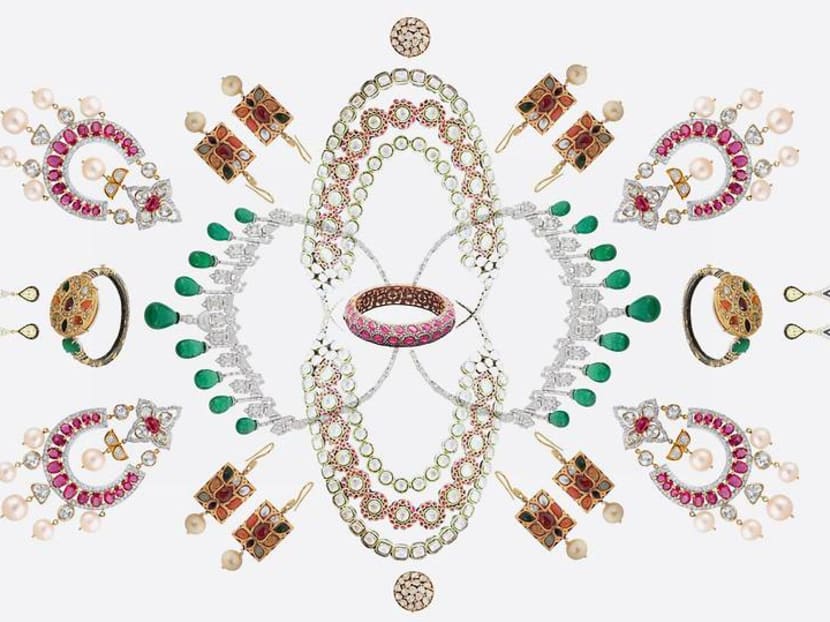
(Art: Chern Ling)
05 Nov 2022 06:30AM (Updated: 04 Jul 2022 09:31PM)
Indians take a long and profound human relationship with jewellery, one so unique information technology has spawned an entire universe of its own, boasting diverse manner codes and techniques.
The first ever diamonds in the world were found in Bharat, and the country's legendary – and now depleted – Golconda mines produced such icons as the Kohinoor and Hope diamonds.
The country'south potent Hindu culture also birthed a style called temple jewellery and introduced a number of superstitious uses for gemstones, while the advent of the Mughals in the 1500s introduced techniques such as Kundan that are still widely used today.
Far from being considered old-fashioned, these antique styles are finding favour with young Indians today. When leading Bollywood actress Anushka Sharma tied the knot with cricket superstar Virat Kohli late terminal year, she wore elaborate, ethnic jewellery that featured the fine art of Kundan and Polki diamonds.
READ: Encounter the Indian designers who made Priyanka Chopra'south engagement outfit
In Singapore, a number of jewellers specialise in modernistic Indian jewellery: Manjrie, Temptations Jewellery and Jaipore Jewels. This Deepavali, the founders share their festive traditions, their inspirations, and their designs, which can easily exist worn with gimmicky clothing.
MANJRIE
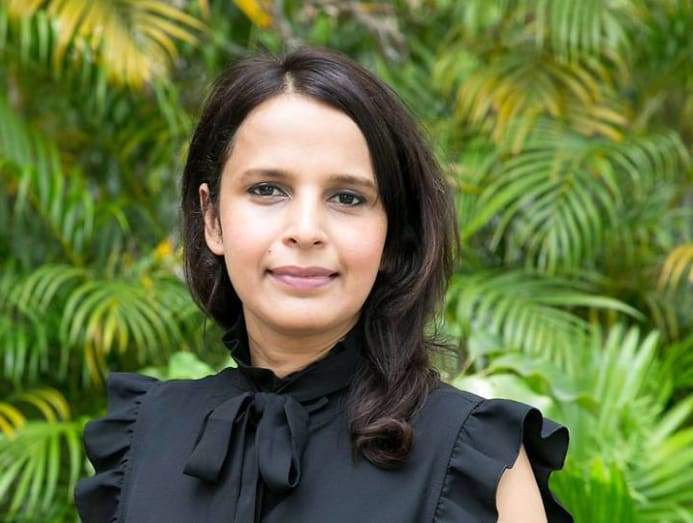
It is customary for Indian families to jump clean earlier Deepavali, and it was no different in Manjrie Gupta's household when she was growing up. As a immature child, however, she truly disliked having to clean up, but age has taught her how to appreciate those special moments.
"Jump cleaning brings in fresh free energy and in its own weird fashion brings family together," the Indian-born designer told CNA Lifestyle. "I hated it growing up but now information technology has stayed with me. Also it was my sister's and my responsibility to light earthen lamps and candles all effectually the business firm in the evening. It's one singled-out and very sweetness memory of Diwali for me and would dear to see that tradition keep in my family unit."
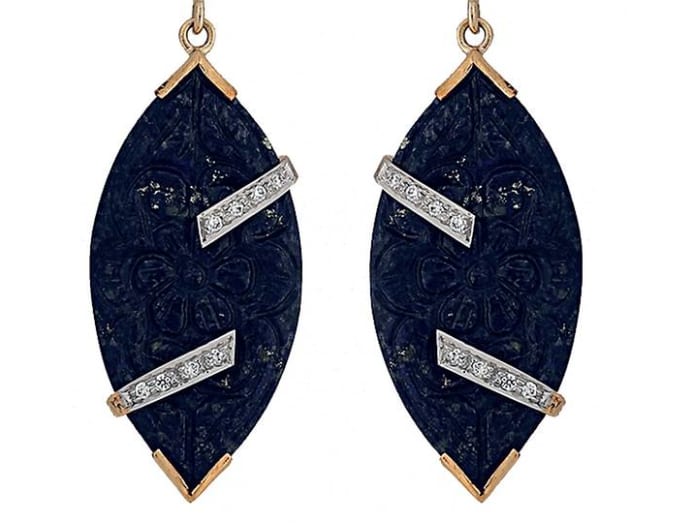
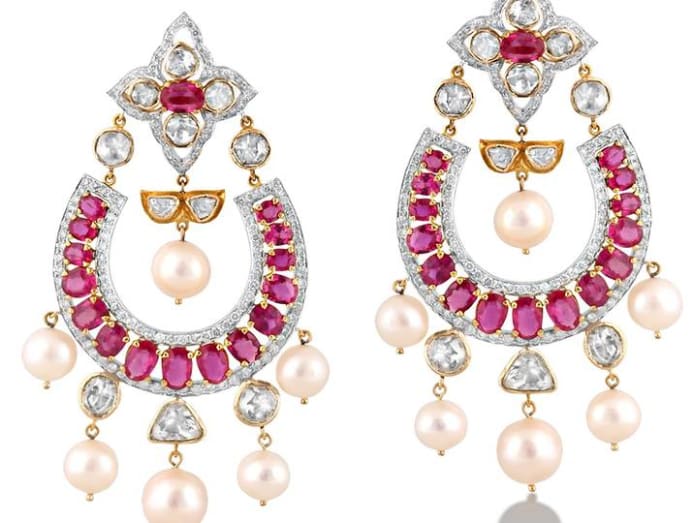
On Deepavali twenty-four hour period itself, Gupta and her family wake up early to decorate the house and exchange concluding-minute gifts and sweets with their neighbours. As evening dawns, she'll dress up in elaborate Indian finery for the prayers and a night of heavy feasting, looking resplendent in a traditional Indian skirt paired with a blouse, topped by chand-bali earrings (moon shaped earrings from Mughal times), which she designed herself.
Gupta had studied technology at the heritance of her parents, but her passion for jewellery proved besides potent to ignore. Ten years ago, she left a promising career in computer science engineering at various firms in the U.s.a. and United kingdom to set upwards her eponymous brand, embarking on a journey of creating Indian jewellery for the modern woman.
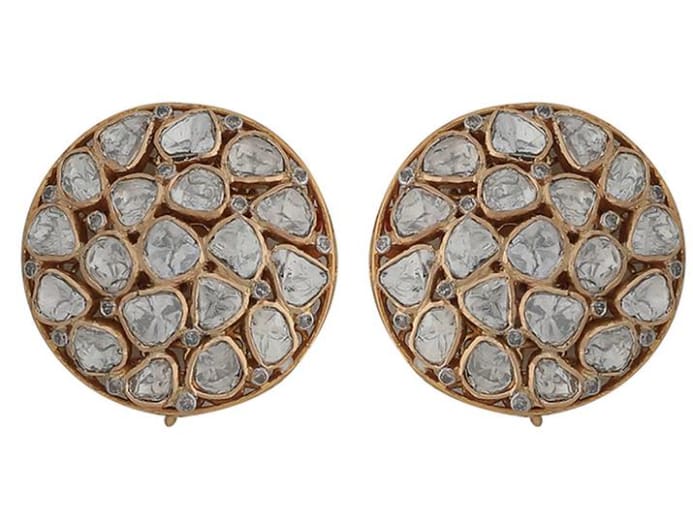
"I spotted a gap for a brand that mixed traditional Indian elements with a chichi aesthetic. Right later graduating, I started working on my ain designs. With fourth dimension, my namesake brand grew into a fine jewellery label with a vision of melding exotic elements of the East and modernistic silhouettes of the West," she explained.
There are several traditional elements that she proudly uses in her jewels, namely Kundan, Meenakari and Polki diamonds. The influence of the Mughal period is best seen in the Kundan style, where glass pieces are embedded in a 24K gold mould. While coloured stones are frequently used, sometimes y'all'll encounter uncut diamonds that are called Polki set within the gold.
READ: Why coloured gemstones are and so popular right at present
Then in that location is Meenakari, where the gold is adorned with enamelled colours and motifs that surround the stone. This technique tin can also be used to colour the underside the jewel. A combination of all three techniques in ane piece is chosen Jadau.
By and large, these techniques are used on very elaborate and opulent necklaces that are frequently seen on brides, only Gupta has appropriated these styles on smaller pieces that can exist worn daily. "The traditional jewellery of Bharat has e'er been quite heavy, consisting of voluminous gold pieces. Still, with changing times, jewellery that's lighter in weight has gained a lot of popularity among Indian women," she explained.
TEMPTATIONS JEWELLERY
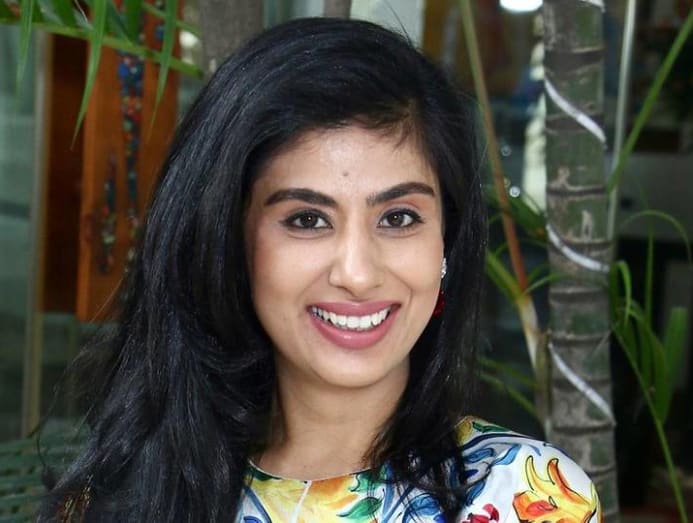
For Indian-born Nayantara Dhillon, Diwali was a favourite festival of hers growing up. The days leading upward to the festival were e'er full of anticipation of meeting and greeting, souvenir-exchange, a plethora of Indian delicacies and the opportunity to don colourful traditional clothing.
"We place diyas all over the business firm and do traditional rangolis in the house. The solar day is spent offering prayers in different workspaces and homes. On Diwali night, we offering special prayers to Lord Ganesha and Lakshmi, the God of new beginnings and prosperity and the Goddess of wealth," she told CNA Lifestyle.
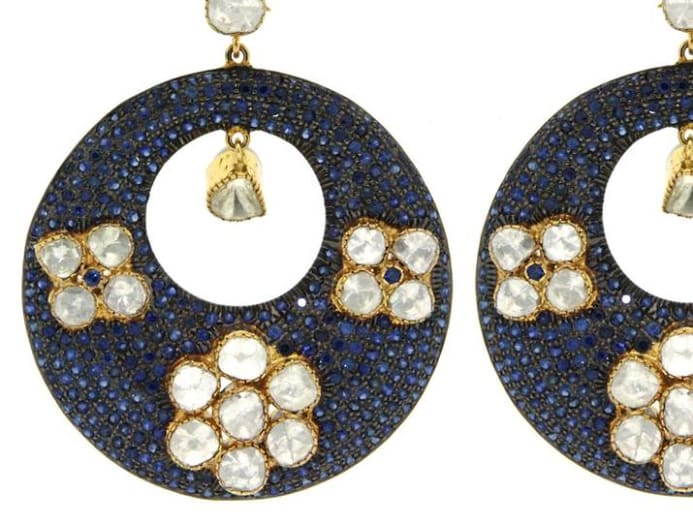
"Afterward the prayers and the singing of hymns, a few sparklers and crackers are burst. We get out all ours doors and windows open as it is believed to be a good omen for the Goddess Lakshmi to enter and anoint our homes for the coming year," she added.
During the festive flavor, Dhillon loves wearing her traditional heirloom jewels that have been passed downwards from generations. It's no wonder that Temptations Jewellery – which was founded in Hong Kong 30 years ago and which made its foray into Singapore in 2022 – is inspired past India's vast heritage.
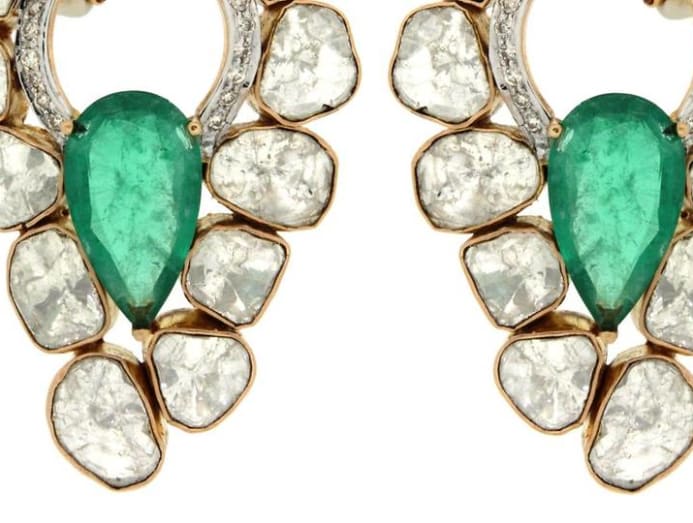
"Some of the Indian techniques used in our jewellery are that of Jadau, Kundankari and Meenakari," she explained. "Our collection of Indian jewellery combines contrasting geometric and asymmetrical patterns and motifs inspired past tribal folk art, and Mughal motifs of flora and creature."
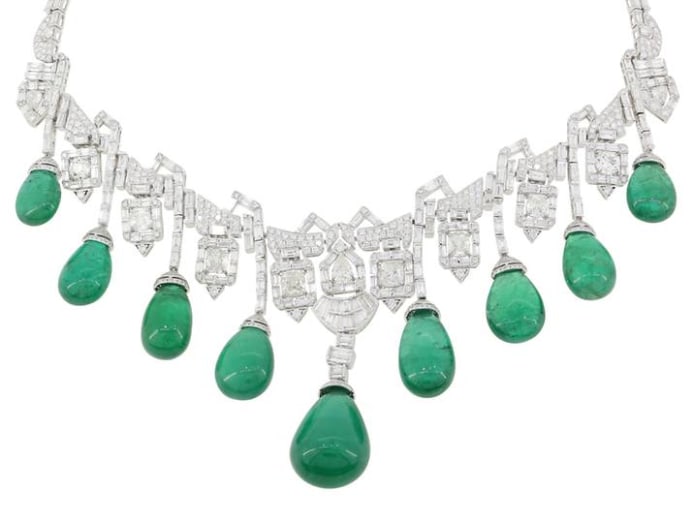
The tear-drib shape, for instance, is a recurring motif in Indian blueprint, and one that is often found in Temptations' jewellery. But it is certainly no pastiche of an archaic way, as Dhillon wishes to create wearable pieces that can be worn on a regular basis, and not just for special occasions.
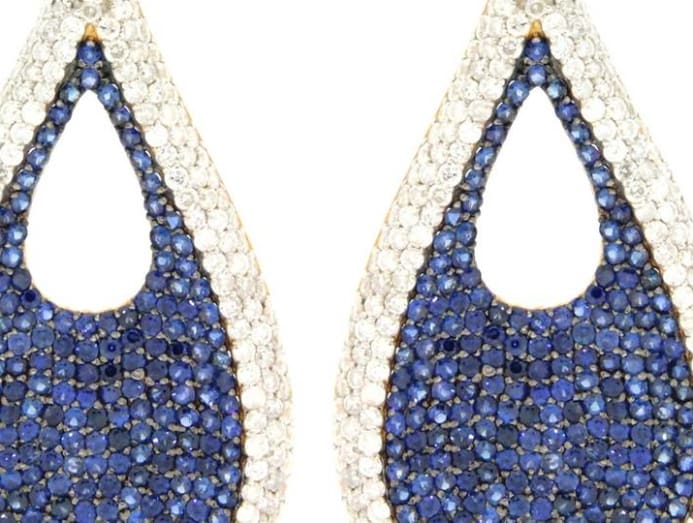
"Every Jadau and Polki slice nosotros design is in keeping with international sensibilities and tin exist used not merely for traditional but also for fusion and contemporary wear. While our collections are inspired by the modernistic woman of today, we have tried to retain the soul of Indian traditional art forms," she explained.
"For example, a fundamental component of every slice we design is that it should also be comfy to clothing for the entire day and tin be complemented in the evening too, something that was lacking in about other designs that just focused on the ornamental aspects of the piece," she added. It is an accolade to her success, then, that many of her clients pair Temptations' jewellery with cocktail dresses and gowns.
JAIPORE JEWELS
A pioneer of Indian jewellery in Southeast Asia, Ritu Aurora established Jaipore Jewels in 1989 after moving to Singapore from India.
She found a gap in the market place here as inappreciably any jewellers were selling coloured gemstones, and found her niche in melding Indian and western fashion codes. "While my customers are both Indian and non-Indian, my design work is often inspired by the ornate work that can be found in India," she said.
Deepavali at the Aurora family is a festive affair, one where they spend equally much fourth dimension as possible with their nearest and dearest. To testify their appreciation, the Auroras also distribute hampers comprising nuts, sweets and candles to their close ones, and arrive a point to decorate their firm in fairy lights and floral arts using Rangoli (a coloured dye) to welcome friends and family.
They also visit their extended family for a meal or to exchange gifts during the Deepavali menstruum, dressed in new outfits and traditional Indian jewellery, designed by Aurora herself.
Today, Aurora keeps the Indian tradition of jewellery-making live by appropriating traditional forms in modern avatars. She explained, "The designs have been derived and refined from these traditional art forms to evolve into a more modern await so as to augment the entreatment to cosmopolitan women. I call back it is about the format in which the pieces are made today. Polki diamonds, for instance, were often seen in large, impressive necklaces, olfactory organ rings and head pieces back in the day, merely can now be adopted to more simple and sleek pieces like rings or pendants."
Aurora says that she was one of the starting time designers in Singapore to introduce Polki diamonds to this part of the world. She explained, "Polki are a distinctively Hyderabadi style of cutting diamonds that are flat with a larger surface or table and accept less depth. The light refracts differently; it is warmer and the outcome is spectacular. Polki jewellery was loved past the Mughals, and Rajasthani jewellers became experts in combining these diamonds with enamel and coloured stones. The tradition lives on."
Source: https://cnalifestyle.channelnewsasia.com/cna-lifestyle/how-three-indian-jewellers-are-putting-their-own-spin-traditional-designs-238551

Post a Comment for "How three Indian jewellers are putting their own spin on traditional designs"